Not all students are created equal. I was reminded this last week at my TLC cohort training. (Technology Leadership Certification). Part of the training involved a group from Indiana that focuses on students with disabilities both physically and mentally. Some of the kids they deal with are blind, deaf, learning disabled. It helped me realize the need for modified and differentiated instruction to reach all kids. The presenters shared with us several tools that we can use to help us reach the learners. Some things are way cool and I never expected how easy they are to do.
For starters, if you are using your phone and have a document open in google, you can talk right into the document and it will sync. iPhones definitely work and android phones that have Google Keyboard or voice to text installed on them let it work. It might use data plans, but, if you have a student who is learning disabled, you can have them create a doc for notes and you can record your lesson right onto the doc for them for later reference. Isn't that an easy way to help kids be more successful? One thing to note, you will have to be in a BYOD school or have a policy in place that permits kids to access a wireless network at school. (Maybe even a guest network that students can access that gives them limited permissions.)
Another thing to remember is captioning videos. If you are going to flip your class, caption your lesson. If you upload your lesson to YouTube, it will auto caption for you, but you will have to edit it to assure it is the right information. You can also use the free software on your computer, iMovie or Movie Maker, depending if you are on PC or Mac. Either way, that simple step, which through YouTube takes only a little extra time will help that student in need of text be more successful. It's hard to watch a video if only audio is present. Some learners need just a little more help, and that could be a caption.
The next few posts I do will provide a few tools that can be added very simply to your computer or to Chrome to help make a learner's life a lot easier. Check back for more.
Tuesday, June 24, 2014

Thursday, June 12, 2014
Summer PD
Summer vacation has started and I am ready to go full swing into my own personal PD. I have talked about personalized PD frequently lately. This summer is no different. My goal is to spend at least one day a week working on PD so I can share things with my staff. I am almost done with my TLC training to become a technology coach. I have even established a website to send them to for tips and techniques. I am hoping my experiences will better their experience with 1:1 learning and web 2.0.
In my TLC training, I have been asked to visit the Digital learning day blog created by the Indiana DOE. It's a month of guest bloggers who write about a tool. I have been challenged to try a tool and do my own blog post about how it would benefit me and also evaluate it for the SAMR model. I think I am going to spend a little more time focusing on that challenge and come up with several tools. While I may not go so indepth as to evaluate the SAMR component, I am going to find some tools and share them with my readers.
That is my summer plan. Let's get started on summer vacation and personalized PD.
Tuesday, May 20, 2014
Keeping a collection Fresh: My annual Weeding
About two weeks ago, my assistant and I decided it was time to start our yearly book weeding session. It is such a long process, but we know that the final outcome is best for kids and the library.
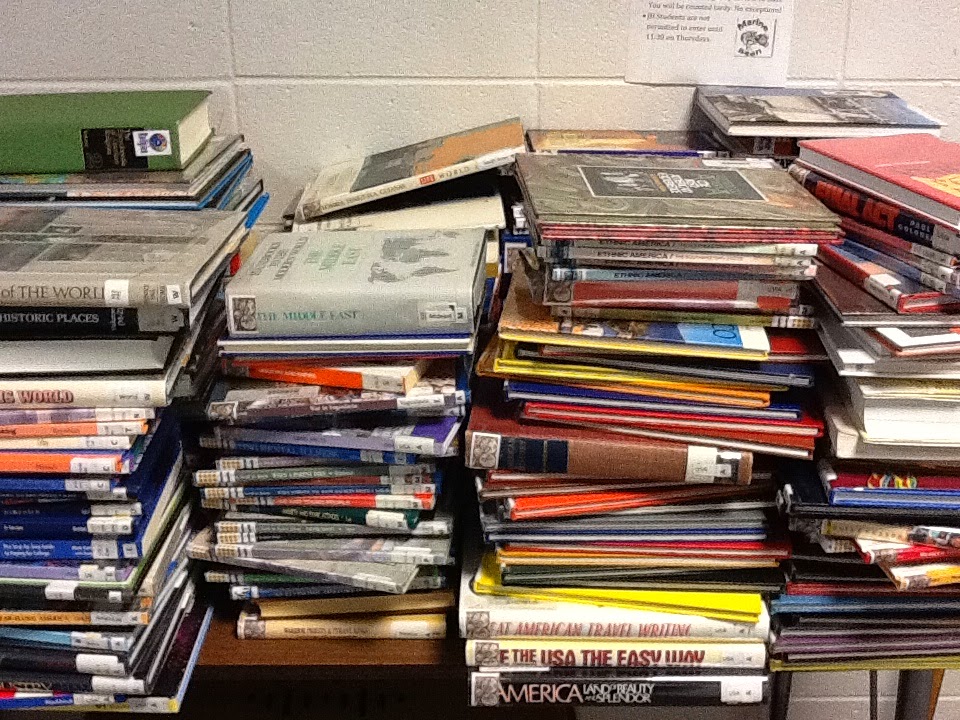
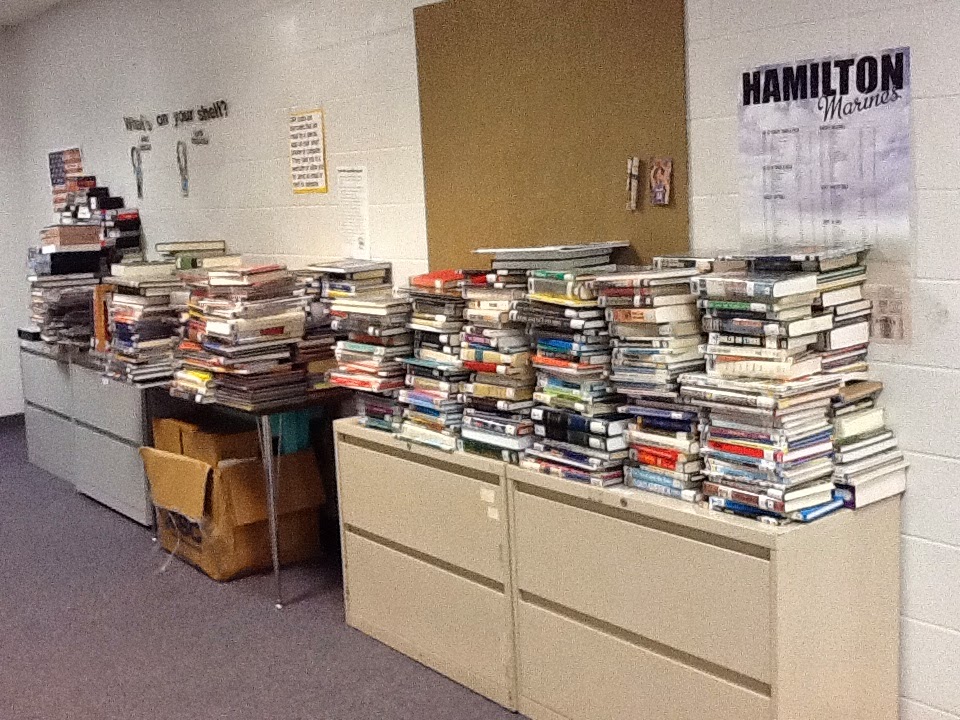
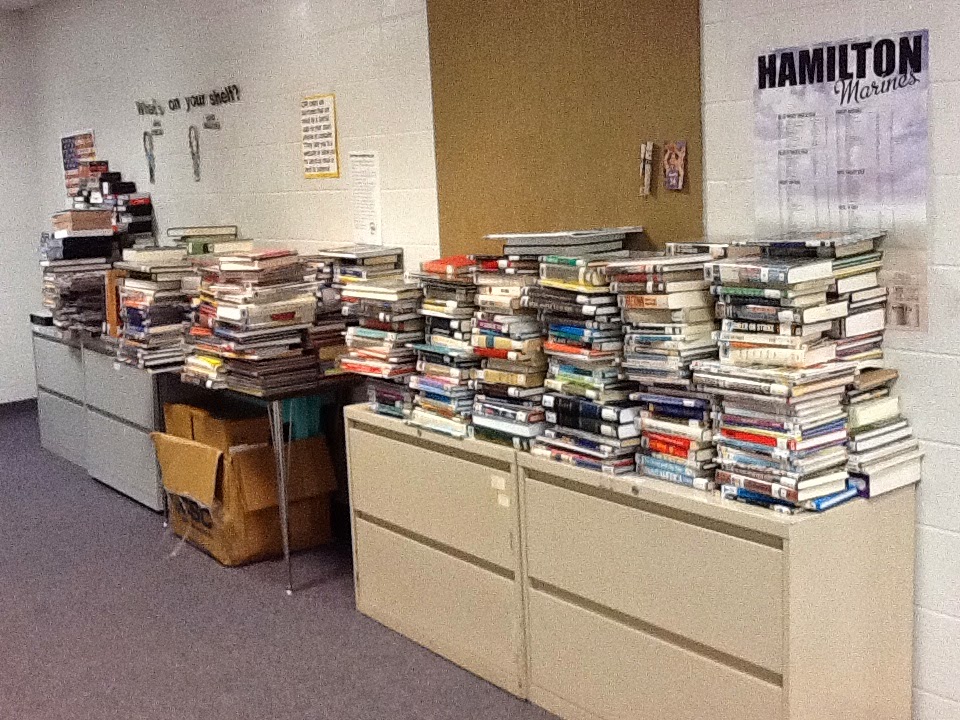 Our plan was to clear out some books that hadn't circulated since I took over in 2010, even after we moved them and reorganized the collection. We found over 600 books have sat on shelves, collecting dust and getting more and more outdated. We did a lot of evaluating and discussing to decide what to do. We decided after a lot of thought and discussion that weeding was the ultimate conclusion.
I hate getting rid of books. I am a book hoarder. Upon a visit to my house, it is evident, but, sometimes, getting rid of a book is the best thing for it, especially if the topics are so antiquated that they are useless to keep. It is hard to write an accurate research paper with a book that talks about information relevant in 1995, as many of my science books were.

With our weeding, we focused heavily on the Science, Health and Geography books and VCR tapes (yes, I had a huge collection of these) after all, who needs a book about Burma when it hasn't existed in ages. We looked at our historical books and political books and determined what was available online via databases and more current sites. Our method to weeding is probably typical of most districts, but, I did a few things a little differently. I asked the staff.
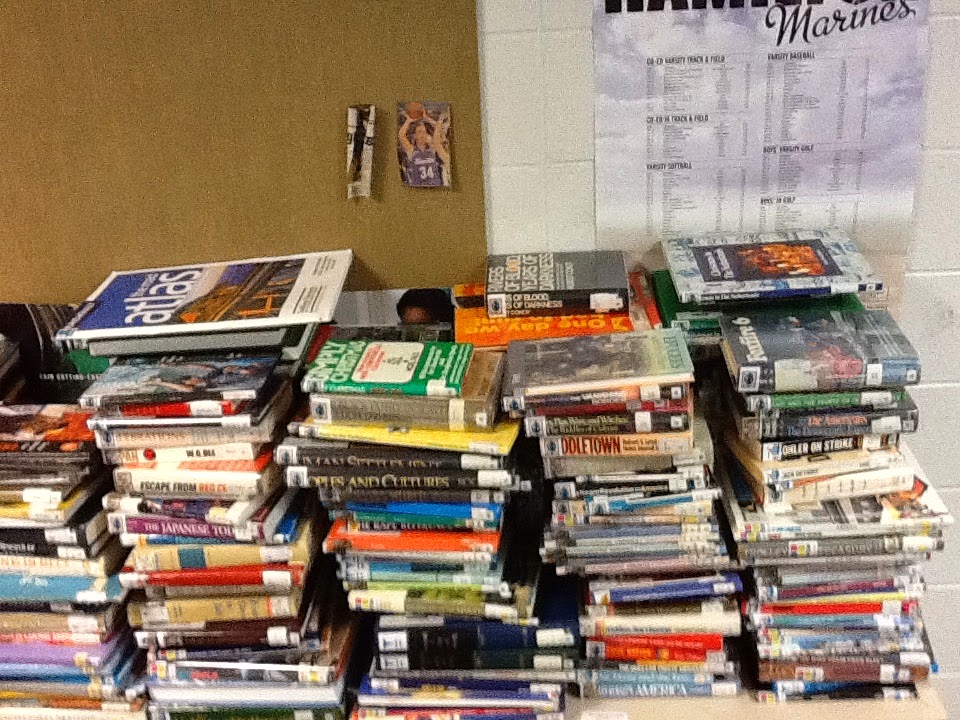 We have a few teachers who require students to have book sources for their research papers. I relied heavily on these folks, as they know what their students need. I invited them in, handed them a cart and asked them to pull unneeded materials. I got a lot of response from them. I also had several come to me telling me they would take the copies to their room as a reference.
Despite my efforts of encouraging staff to use other sources, I still see a few of our teachers rely heavily on books, even if the material is outdated. We decided that history doesn't change, much. We didn't weed much unless we have multiple books on the same topic and some of them were in bad condition.
The exciting thing is, teachers came in after I announced the weeding and started grabbing books for their classrooms that have been sitting in the library, unused, for four years. What do we do with the balance? We donate them. One of my former students is at a very low funded school with a 98% free and reduced rate. I am going to let him look at them. I also send some to a program founded by that same student called Refugees Read. It ships books to African countries and builds libraries.
Our plan was to clear out some books that hadn't circulated since I took over in 2010, even after we moved them and reorganized the collection. We found over 600 books have sat on shelves, collecting dust and getting more and more outdated. We did a lot of evaluating and discussing to decide what to do. We decided after a lot of thought and discussion that weeding was the ultimate conclusion. I hate getting rid of books. I am a book hoarder. Upon a visit to my house, it is evident, but, sometimes, getting rid of a book is the best thing for it, especially if the topics are so antiquated that they are useless to keep. It is hard to write an accurate research paper with a book that talks about information relevant in 1995, as many of my science books were.
With our weeding, we focused heavily on the Science, Health and Geography books and VCR tapes (yes, I had a huge collection of these) after all, who needs a book about Burma when it hasn't existed in ages. We looked at our historical books and political books and determined what was available online via databases and more current sites. Our method to weeding is probably typical of most districts, but, I did a few things a little differently. I asked the staff.
We have a few teachers who require students to have book sources for their research papers. I relied heavily on these folks, as they know what their students need. I invited them in, handed them a cart and asked them to pull unneeded materials. I got a lot of response from them. I also had several come to me telling me they would take the copies to their room as a reference.Despite my efforts of encouraging staff to use other sources, I still see a few of our teachers rely heavily on books, even if the material is outdated. We decided that history doesn't change, much. We didn't weed much unless we have multiple books on the same topic and some of them were in bad condition.
The exciting thing is, teachers came in after I announced the weeding and started grabbing books for their classrooms that have been sitting in the library, unused, for four years. What do we do with the balance? We donate them. One of my former students is at a very low funded school with a 98% free and reduced rate. I am going to let him look at them. I also send some to a program founded by that same student called Refugees Read. It ships books to African countries and builds libraries.
Friday, May 16, 2014
Data collection in the library
I have been in the library for four school years now and I am pleased with what I have done, but I came to realize after I attended the TLCHAT virtual cafe last week that there is one component I am not focusing on that I need to: Data collection.
I learned a lot at the virtual cafe, and it inspired me to start collecting data. One gal actually has a google form she fills out every day, a journal of sorts that logs what happened, numbers, circulation records and the good and the bad. I decided to take that idea and put together my own document that will help me journal the day. I decided I needed to get into the habit of doing it right away, so I can get myself and my staff trained to keep the data. I have been keeping track of student comings and goings since Christmas time, I generated a google form they fill out when they come in, and I get the names of the kids, their reason and the teacher. It has come in handy when a plethora of children suddenly arrive unannounced. I can go to the teacher and remind them to give me a heads up, etc. It also helps me see the why for the visit.
The main problem with the form is the data it generates. There is so much information that figuring out what I need is a challenge. I think the daily form with the number of kids in, circulation records and such is going to be my push. I am envisioning a monthly data report, even posting the data once a month on the school library blog. I think if people see what is happening and why, maybe it will impact funding, support keeping an aid, support my goal for a shift from a media center to a learning commons, and help me get the grants I want. I never realized how important the data collection is. I am seeing a definite need to keep track and to generate charts and such with the data I collect.
I suspect I will find the time I put into data collection will help me a great deal with my numerous causes and needs.
Subscribe to:
Posts (Atom)